Missions with Data Served by IRSA




















Spitzer Space Telescope
The Spitzer Space Telescope was launched on August 25, 2003.
Spitzer was the final mission in NASA's Great Observatories Program. During the
5.5 year cryogenic mission, Spitzer made spectral and photometric observations
between wavelengths of 3 and 180 microns. Imaging at 3.6 and 4.5 microns continued
during the Spitzer Warm Mission, concluding on January 30, 2020. IRSA serves all Spitzer data from both
the cryogenic and warm missions through the Spitzer Heritage Archive (SHA).
In addition, IRSA serves enhanced data products from Spitzer Legacy and Exploration Science programs.
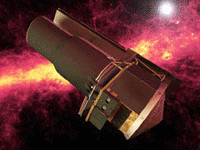
Pictured: The Spitzer Space Telescope in an infrared Milky Way, from the
Spitzer Cool Cosmos Image Gallery
WISE/NEOWISE
The Wide-field Infrared Survey Explorer (WISE) is a NASA Medium
Explorer mission launched in December 2009. It is an
all-sky survey over four broad-wavelength bands centered near 3.4,
4.6, 12, and 22 microns. In the two shortest wavelength bands,
WISE reached sensitivities half a million times deeper than the
Diffuse Infrared Background Experiment onboard the Cosmic
Background Explorer. In the two longest wavelength bands, WISE
reached sensitivities 500 times better than the Infrared
Astronomical Satellite. In early October 2010, after completing its prime science mission, the spacecraft ran out of coolant.
However the NEOWISE portion of the WISE mission continued for four months, using
the 3.4 and 4.6 micron channels to search for asteroids and comets. The spacecraft
was reactivated in September 2013 for the NEOWISE-R survey.
IRSA serves as the archival center for all WISE data.

Euclid
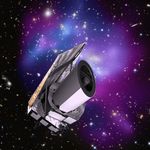
Euclid is a European Space Agency (ESA) M-class mission that launched on July 1, 2023. During its 6 year nominal mission, Euclid is understaking observations designed to enable studies of the geometry the Universe and the nature of dark matter and dark energy. The Euclid Wide Survey will cover 15,000 square degrees of the extragalactic sky, obtaining photometry, photometric redshifts and shape measurements of over a billion galaxies, as well as near-IR slitless grism spectra of millions of galaxies. An additional Deep Survey in several fields will cover a total of 40 square degrees. The Euclid archive will also include optical imaging and photometry from ground-based facilities. IRSA provides a science archive designed to meet the needs of the US community and that complements ESA's primary Euclid Archive System.
SPHEREx
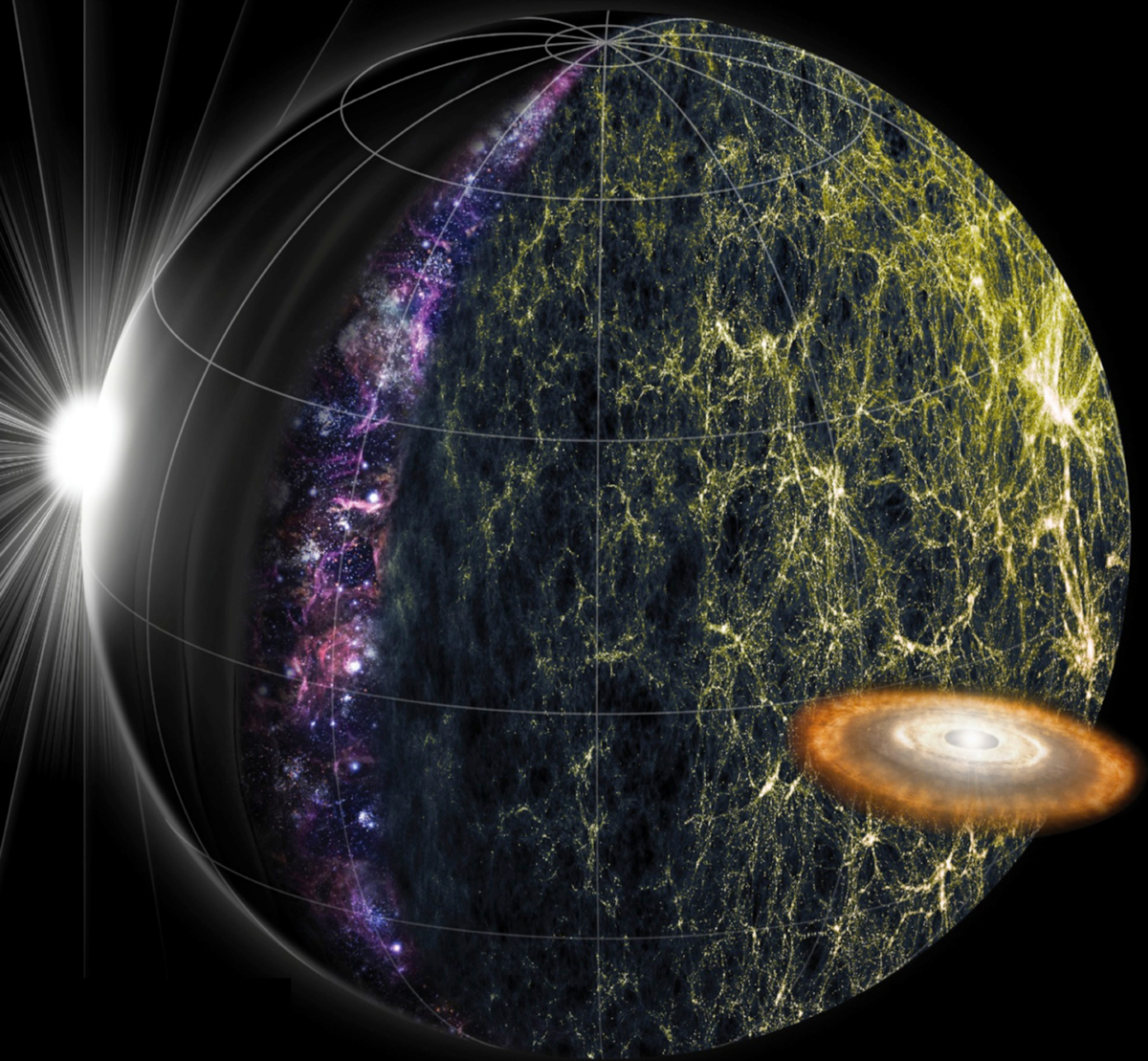
SPHEREx is an all-sky spectroscopic survey mission conducting 4 all-sky surveys over 2 years, providing the first near-infrared all-sky spectral survey for the astronomical community with a data pipeline operated at IPAC and a data archive hosted by IRSA.
SOFIA
SOFIA, the Stratospheric Observatory for Infrared Astronomy, was a
Boeing 747SP aircraft modified to accommodate a 2.5 meter
reflecting telescope. Its nine instruments
provided researchers with access to a continuous wavelength
coverage from the optical to the submillimeter (0.35 - 655
microns). SOFIA was the largest airborne observatory in the
world.
IRSA is the primary archive for SOFIA data products.

IRTF
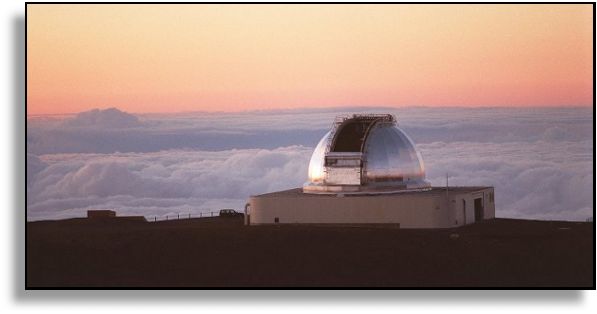
The IRTF is a 3.0 meter telescope, optimized for infrared observations, and located at the summit of Mauna Kea, Hawaiʻi. The observatory is operated and managed for NASA by the University of Hawaiʻi Institute for Astronomy, located in Honolulu. NASA provides the costs of operation and NSF provides funding for new focal plane instrumentation through the peer review process. Observing time is open to the entire astronomical community, and 50% of the IRTF observing time is reserved for studies of solar system objects.
2MASS
The Two Micron All Sky Survey (2MASS) scanned the entire sky in three
near-infrared bands, J (1.25 µm), H (1.65 µm) and Ks
(2.17 µm), to produce a deep survey of uniform calibration quality.
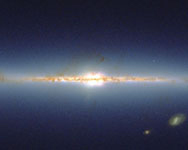
Pictured: The Milky Way as compiled from a quarter billion
stars in the 2MASS catalog, from the
2MASS Showcase.
Herschel
The Herschel Space Observatory was the European Space Agency's
fourth "Cornerstone Mission" and deployed a passively cooled 3.5
meter telescope to observe the Far-infrared and Submillimeter
Universe. Herschel launched in May 2009 and operated until 29 April 2013. In keeping with its role as
NASA's infrared and submillimeter data archive, IRSA is
providing tools for searching the Herschel archive at ESA, and hosts
Herschel User-Provided Data Products to facilitate cross-comparison with
data from other infrared missions.

Planck
Planck is a European Space Agency mission with significant NASA
involvement. The primary goal of the Planck mission is to measure
the intensity and polarization of the sky over a range of frequencies
from 30 to 857 GHz (wavelengths of 1 cm to 350 microns) in order to
characterize the Cosmic Microwave Background (CMB) radiation. Planck
was launched on May 14, 2009 aboard the same rocket that carried
the Herschel Space Observatory into space.
The nominal Planck mission ended after 15 months
on Nov. 2010, but the extended mission continued
until October 2013. IRSA archives
Planck data products for use by the U.S. Astronomical Community.

IRAS
IRAS was a joint project of the US, UK, and the Netherlands. It operated in 1983, performing an unbiased,
sensitive, nearly full-sky survey at 12, 25, 60 and 100 µm. The IRAS mission holdings are comprised of
catalogs and images, together with specialized software tools and accompanying documentation.
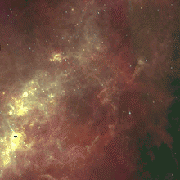
Pictured: A view of the Vela/Puppis region in our Milky Way galaxy, from the
IPAC Infrared Gallery.
MSX
The MSX mission completed the census of the mid-infrared sky. It covered
the regions missed by IRAS or where the sensitiviy
of IRAS was degraded by confusion noise arising in regions of high source
densities or structured extended emission.
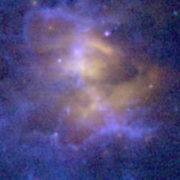
Pictured: A false-color composite of the Eagle Nebula, from the
IPAC Infrared Gallery
ISO
IRSA provides an interface to the archive for the European Space Agency's Infrared Space Observatory
(ISO), housed near Madrid, Spain. ISO collected data between November
1995 and April 1998. Aboard ISO were four science instruments: an infrared
camera (CAM), a long-wavelength spectrometer (LWS), a photo-polarimeter
(PHT), and a short-wavelength spectrometer (SWS).
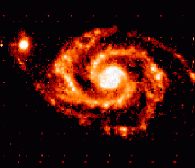
Pictured: ISOCAM map of the Whirlpool Galaxy (M51) at a wavelength of 15 microns, from the
IPAC Infrared Gallery
SWAS
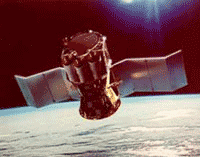
SWAS was launched into low Earth orbit on December 05, 1998, and obtained spectra at
487-557 GHz. The primary objective of SWAS was to survey
water, molecular oxygen, carbon, and isotopic carbon monoxide emission
in a variety of galactic star forming regions.
ZTF
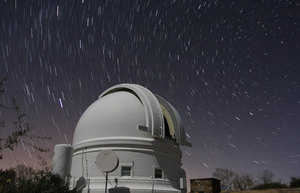
The Zwicky Transient Factory (ZTF) is a new time-domain survey that had first light at Palomar Observatory in 2017. Building on the highly successful legacy of the Palomar Transient Factory (PTF), ZTF uses a new camera with a 47 square degree field of view mounted on the Samuel Oschin 48-inch Schmidt telescope. ZTF's extremely wide field and fast readout electronics enables a survey more than an order of magnitude faster than that of PTF.
PTF
The Palomar Transient Factory (PTF) was a fully-automated, wide-field survey aimed at a systematic exploration of the optical transient sky.
COSMOS
The Cosmic Evolution Survey (COSMOS) project is an astronomical survey designed to probe the formation and evolution of galaxies as a function of cosmic time (redshift) and large scale structure environment. The survey covers a 2 square degree equatorial field with imaging by most of the major space-based telescopes (Hubble, Spitzer, GALEX, XMM, Chandra) and a number of large ground based telescopes (ALMA, Subaru, VLA, ESO-VLT, UKIRT, NOAO, CFHT, and others). Over 2 million galaxies are detected, spanning 75% of the age of the universe. The COSMOS survey involves almost 100 scientists in a dozen countries.

BLAST
BLAST was a 2-m balloon-borne submillimeter telescope that conducted the first wide-area submillimeter surveys at wavelengths 250-500 microns on two long-duration flights in 2005 and 2006. Built and flown by an international collaboration headed by the University of Pennsylvania (P.I. Mark Devlin), the telescope used a prototype of the SPIRE camera for the Herschel satellite.

Bolocam
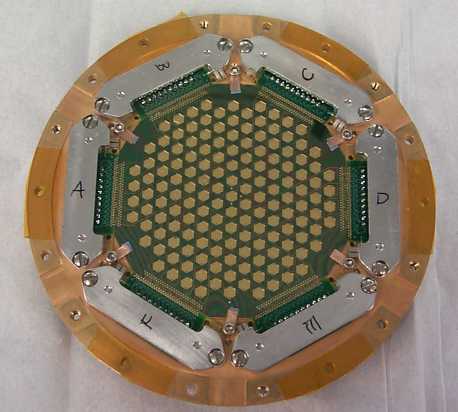
Bolocam was the millimeter-wavelength bolometer array camera designed for mapping large fields at fast scan rates, for observations at 1.1 and 2.1 mm, at the Caltech Submillimeter Observatory (CSO). The camera has 115 working pixels with 8 arcmin Field of View (FOV) which is approximately circular. The beam Full Width Half Maximum (FWHM) is 30 arcsec at 1.1 mm and 60 arcsec at 2.1 mm. At all wavelengths, the pixel spacing (nearest neighbors of hexagonal close-packed array) is 38 arcsec.
IRTS
The Infrared Telescope in Space (IRTS) was a cryogenically cooled,
small infrared telescope that flew from March - April in 1995. It surveyed
approximately 10% of the sky with a relatively wide beam during its
20 day mission. Four focal-plane instruments, the Near-Infrared Spectrometer
(NIRS), the Mid-Infrared Spectrometer (MIRS), the Far-Infrared Line
Mapper (FILM), and the Far-Infrared Photometer (FIRP) made simultaneous
observations of the sky at wavelengths ranging from 1 to 1000 µm.
Contributed Data Sets
IRSA accepts community-contributed data or high-level science products as resources permit. Eligible data sets have been described in a peer-reviewed journal article, are scientifically closely related to a mission that has data archived at IRSA, and have high potential for use by other research groups for new science.
External Data Sets
IRSA has ingested a limited selection of non-NASA data sets that are useful to IRSA researchers.
AKARI
AKARI was an infrared astronomical satellite operated by the Japanese Aerospace Exploration Agency (JAXA). AKARI launched on 21 February
2006 and surveyed more than 96% of the sky at wavelengths of 9-160 microns during its 16-month cryogenic mission.

DENIS
The Deep Near-Infrared Survey of the Southern Sky (DENIS) performed a 16,700 sq. deg. survey using three simultaneously acquired bands: one optical band (Gunn-i at 0.82um) and two near-infrared bands (J at 1.25um and Ks at 2.15um), with limiting magnitudes of 18.5 mag, 16.5 mag, and 14.0 mag, respectively. DENIS was conducted by a European consortium using the 1m telescope at the European Southern Observatory in La Silla, Chile. DENIS observations began at the end of 1995 and were completed on 09 September 2001.
DSS
The Digitized Sky Survey (DSS) is a ground-based imaging survey of the entire sky in several colors. The survey, performed with Palomar and UK Schmidt telescopes, produced photographic plates that were later digitized at the Space Telescope Science Institute (STScI) to produce the Hubble Guide Stars Catalog (GSC). The DSS images are mirrored at IRSA to facilitate cross-comparisons between infrared and optical data.
Gaia
Gaia is an ESA mission to map the positions and proper motions of
over 1 billion stars, along with radial velocities for the
brightest 150 million sources.
PPMXL
PPMXL is a catalog of positions, proper motions, 2MASS and optical photometry of 900 million stars and galaxies,
aiming to be complete down to about V=20 full-sky. It is the result of a re-reduction of USNO-B1
together with 2MASS to the ICRS as represented by PPMX.
For more details, see Roeser, Demleitner, & Schilbach (2010).
PPMXL is the first composite catalog served by IRSA.
SDSS
SDSS images are used in several IRSA services.
The Sloan Digital Sky Survey (SDSS) mapped one quarter of the entire sky,
determining the positions and absolute brightnesses of more than 100 million celestial
objects. It also measured the distances to more than a million galaxies and quasars.
The Data Release 7 (DR7) imaging data cover 11663 square degrees, and include information
on roughly 357 million objects. SDSS serves, among other products, FITS image files in
five bands (u, g, r, i, z). IRSA includes SDSS data in Finder Chart and the Montage
Image Mosaic service.
USNO
The United States Naval Observatory (USNO) has performed several all-sky
optical surveys spanning many decades. IRSA serves copies of the USNO-B1.0
Catalog, the UCAC4 catalog, and the URAT1 catalog.
Coming Soon
GUSTO
The Galactic/Extragalactic ULDB Spectroscopic Terahertz Observatory (GUSTO) is a NASA Explorer mission of opportunity expected to launch from Antarctica and operate for up to 170 days. It is an Ultralong-Duration Balloon (ULDB) carrying an infrared telescope with a spectrometer designed to measure the interstellar cooling lines [CII], [OI], and [NII] at 158, 63, and 205 microns, respectively. GUSTO will map out large sections of the plane of the Milky Way and the Large Magellanic Cloud, with the goal of studying all phases of star formation within the interstellar medium (ISM). IRSA will be the public archive for GUSTO data.
ULTRASAT
The Ultraviolet Transient Astronomy Satellite (ULTRASAT) is an Israeli mission with US and German participation, expected to launch in 2026. It will carry out the first wide-field time domain survey in the ultraviolet, to meet the key goals of constraining the physics of gravitational wave sources and collecting early ultraviolet light curves of hundreds of core-collapse supernovae. IRSA will host public ULTRASAT data, providing a science archive that complements the primary ULTRASAT archive in Israel.
NEO Surveyor
The Near-Earth Object Surveyor space telescope (NEO Surveyor) is designed to help advance NASA's planetary defense efforts to discover and characterize most of the potentially hazardous asteroids and comets that come within 30 million miles of Earth's orbit. Expected to launch in 2027, it will repeatedly image the sky at 4.6 and 8 um over a baseline of 5 years. IRSA will be the primary NEO Surveyor data archive, which will be used for astrophysics as well as planetary defense.
